Why Athletes Need a High-Protein Breakfast
Starting your day with a high-protein breakfast can help you feel full, support muscle maintenance and growth, and provide energy for the day ahead. For athletes, the morning meal is particularly important because it helps flip the body from a fasted state, where it may be breaking down tissue, to a state of muscle repair and growth.
Skipping breakfast can impede athletic performance, both in the morning and later in the day, according to research referenced by sports dietitians. A balanced breakfast that includes adequate protein can help preserve muscular health and minimize protein breakdown.
- Supports muscle maintenance and growth
- Enhances feelings of fullness and satiety
- Provides steady energy for training and daily activities
Sources: Breakfast Basics Guide, MuscleTech, Bucket List Tummy
How to Balance Protein, Carbs, and Fats
A beneficial breakfast for athletes includes carbohydrates, protein, fats, fiber, water, and electrolytes. The exact amounts depend on your body weight, training intensity, and goals. As a general starting point, aim for 20–40 grams of protein per meal and 30–60 grams of carbohydrates, with potentially more carbohydrates before intense exercise.
Research suggests that evenly distributing protein across meals, rather than concentrating it at dinner, may lead to higher rates of muscle protein synthesis throughout the day. Consuming enough protein to reach the leucine threshold—an amino acid that signals muscle building—is necessary to trigger this process.
- Protein: 20–40 grams per meal as a general guide
- Carbohydrates: 30–60 grams per meal, more before intense workouts
- Fats: Include healthy fats to support overall health and satiety
- Fiber: Choose whole grains, fruits, and vegetables
- Hydration: Don't forget water and electrolytes
Sources: MuscleTech, Bucket List Tummy
Make-Ahead Egg-Based Breakfasts
Eggs are a classic protein source, and making egg-based breakfasts ahead can save you time on busy mornings. Several recipes fit the meal-prep model perfectly.
Egg muffins are a popular choice: whisk eggs with vegetables and lean meats, pour into muffin tins, and bake. They store well in the refrigerator or freezer and can be reheated quickly.
Breakfast burritos are another excellent option. Scramble eggs (or tofu for a vegetarian version), add rice, black beans, sautéed vegetables, and spices, wrap in tortillas, and store in foil for easy freezing. Hard-boiled eggs are a simple, no-cook make-ahead option as well.
- Egg muffins with vegetables and lean meats
- Breakfast burritos with eggs, rice, beans, and veggies
- Hard-boiled eggs for a grab-and-go protein boost
- Whisk eggs with your choice of chopped vegetables, cooked lean meat (like turkey sausage or ham), and seasonings.
- Pour the egg mixture into greased muffin tins, filling each cup about three-quarters full.
- Bake at 350°F (175°C) for 18–20 minutes, or until set and lightly golden.
- Let muffins cool completely, then store in an airtight container in the refrigerator or freezer according to safe food storage guidelines.
Sources: Eat for Endurance, MuscleTech
Overnight Oats and Chia Puddings
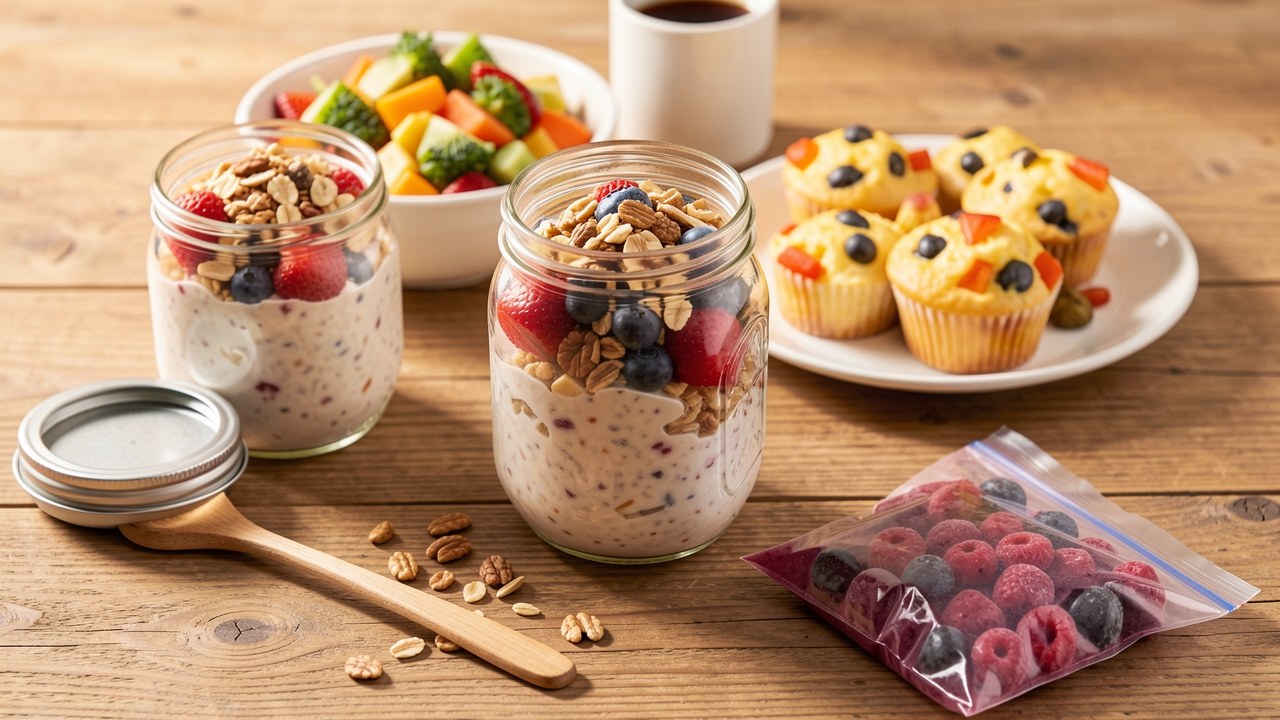
Overnight oats are a no-cook breakfast that you can assemble in minutes the night before. Mix rolled oats with Greek yogurt, Skyr, or a non-dairy alternative, add fruit and other mix-ins, and let it sit in the refrigerator overnight. The result is a creamy, high-protein meal that you can grab and go.
Chia puddings work similarly: combine chia seeds with milk or yogurt, sweeten to taste, and refrigerate until the mixture thickens. Both options are rich in fiber and can be customized with nuts, seeds, and fresh fruit.
- Rolled oats + Greek yogurt or Skyr
- Chia pudding with your choice of milk
- Top with fruit, nuts, seeds, or nut butter for extra protein and healthy fats
Sources: Eat for Endurance, Bucket List Tummy
Protein-Packed Smoothie Freezer Packs
Smoothies are a refreshing way to pack in protein, but washing and chopping produce every morning can slow you down. Solve this by creating smoothie freezer packs: portion fruit and vegetables into individual bags or containers, then freeze. When you're ready, blend the contents with Greek yogurt, kefir, or milk for an instant high-protein drink.
This method not only saves time but also helps you reduce food waste by using up produce before it spoils.
- Berries, bananas, spinach, and other fruits/veggies
- Add Greek yogurt, kefir, or milk at blending time
- Include a scoop of protein powder for an extra boost if desired
Sources: Eat for Endurance
Breakfast Burritos and Wraps for Meal Prep
Breakfast burritos are a hearty make-ahead meal that you can customize to taste. Scramble eggs or tofu, then combine with rice, black beans, sautéed vegetables, and spices. Wrap the filling in whole-grain tortillas, then store individually in foil or freezer-safe wrap.
These burritos can be refrigerated for a few days or frozen for longer storage. To reheat, simply unwrap, place on a plate, and microwave until hot through. For a lower-carb option, use lettuce wraps or low-carb tortillas.
- Scrambled eggs or tofu scramble
- Add rice, black beans, and even cheese for extra protein
- Wrap tightly and store in individual portions
- Cook scrambled eggs or tofu scramble with your favorite seasonings.
- Prepare a filling of cooked rice, black beans, sautéed bell peppers and onions, and optional shredded cheese.
- Warm tortillas to make them pliable, then place a scoop of filling in the center of each.
- Fold in the sides and roll tightly, wrapping each burrito in foil.
- Refrigerate for a few days or freeze for longer storage, following safe food storage guidelines.
Sources: Eat for Endurance
Storage and Reheating Instructions
Proper storage ensures your meal-prepped breakfasts stay fresh and safe to eat. Most cooked breakfast items, such as egg muffins, breakfast burritos, and protein pancakes, can be stored in airtight containers in the refrigerator or freezer, depending on how soon you plan to eat them.
When reheating, use a microwave or oven. For items frozen, thaw overnight in the refrigerator or use the defrost setting on your microwave, then heat until piping hot throughout. Always check that reheated food is heated thoroughly before consuming.
- Refrigerate cooked items within 2 hours of cooking.
- Use airtight containers or freezer-safe bags.
- Label items with the date to keep track of freshness.
- Reheat only the portion you plan to eat; avoid reheating multiple times.
Sources: Eat for Endurance, MuscleTech
More High-Protein Breakfast Ideas
Beyond the categories above, there are many other high-protein breakfasts you can prepare in advance. Greek yogurt parfaits are a simple option: layer yogurt with fruit and granola in jars, and they're ready for the week. Protein pancakes made with oats, protein powder, egg whites, and baking powder can be cooked in batches and stored in the fridge or freezer. Freezer breakfast sandwiches—think English muffins with egg, cheese, and turkey sausage—are also a convenient make-ahead choice.
These options provide variety so you don't get bored with your breakfast routine while still meeting your protein needs.
- Greek yogurt parfaits
- Protein pancakes
- Freezer breakfast sandwiches
Sources: MuscleTech, Fit Protein Kitchen, Health eCooks
Frequently asked questions
How many grams of protein should breakfast include for an athlete?
A common recommendation is 20–40 grams of protein per meal, but your exact needs depend on your body weight, training intensity, and goals. A range of 0.25–0.4 grams per kilogram of body weight per meal is also cited for muscle building. For a 150-pound (68 kg) athlete, that translates to roughly 17–27 grams. Use these as general starting points and adjust based on your individual response.
Sources: MuscleTech, Bucket List TummyCan you prep scrambled eggs in advance?
Cooked eggs, including scrambled eggs, can be part of your meal prep. Make a batch, cool them quickly, and store in the refrigerator in an airtight container. Reheat gently in the microwave or on the stovetop. For longer storage, consider freezing egg-based dishes like muffin frittatas, as they hold up better than loose scrambled eggs.
Sources: Eat for Endurance, MuscleTechHow long do overnight oats keep in the fridge?
Overnight oats can be kept in the refrigerator for a few days, but since they contain fresh ingredients like fruit and yogurt, the exact shelf life can vary. Always check for any off smells or mold before eating. For best quality, make them in individual portions and consume within the week.
Sources: Eat for Endurance, Bucket List TummyAre freezer breakfast sandwiches a good idea?
Yes, freezer breakfast sandwiches are a convenient and practical meal prep option. You can assemble them with eggs, cheese, and your choice of protein on English muffins or biscuits, wrap them individually, and freeze. To reheat, microwave straight from the freezer, adding time in 30-second increments until hot through. They're perfect for busy mornings when you need a grab-and-go meal.
Sources: VLH HealthSources
- Meal Prep High-Protein Breakfasts for Busy Professionals: Energize Your Mornings with Quick Protein-Packed Breakfast Meals — Breakfast Basics Guide
- 11 Easy Breakfast Meal Prep Recipes for Busy Athletes — Eat for Endurance
- High Protein Breakfast Meal Prep: Fuel Gains From the First Bite — MuscleTech
- High Protein Breakfast Meal Prep ( Make-Ahead Gym Breakfast) — Fit Protein Kitchen
- 12 High Protein Breakfast Meal Prep Recipes l Health eCooks — Health eCooks
- 9 Ideas For Easy Meal Prep Breakfast For Athletes On the Go — Bucket List Tummy
- 11 High-Protein Breakfast Meal Prep Ideas (30g+ of Protein) - VLH health — VLH Health