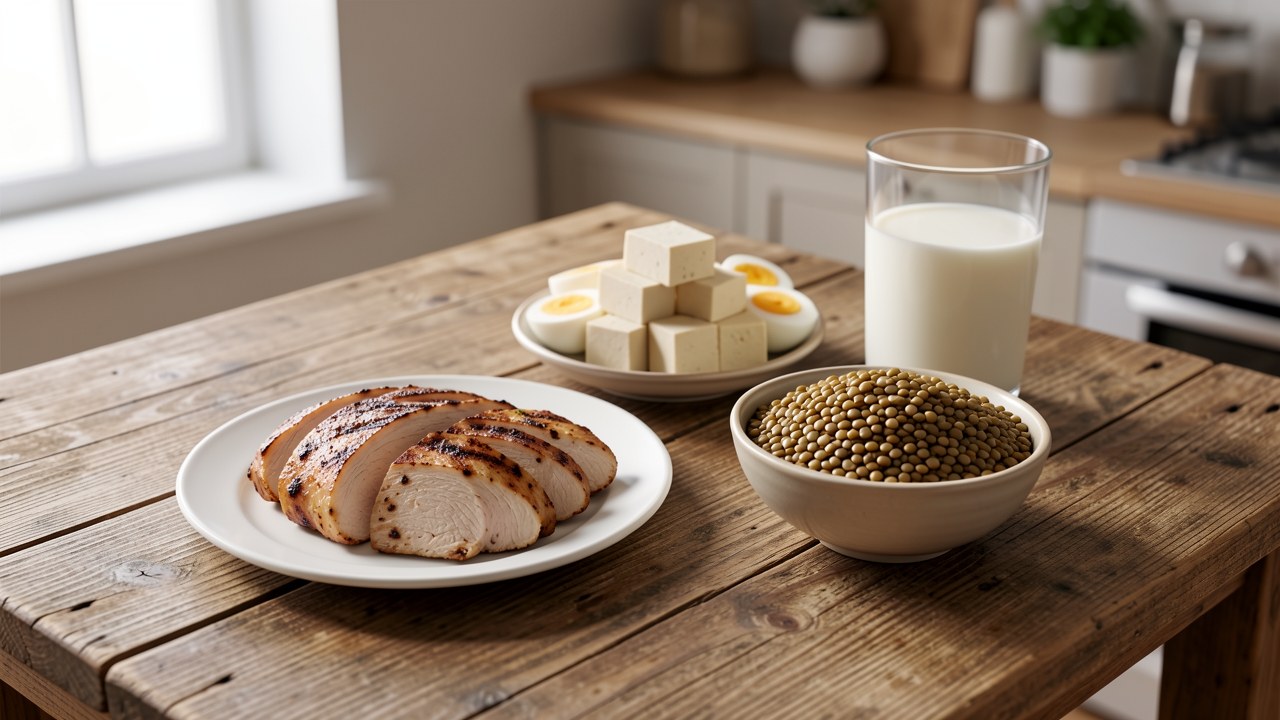
Why Protein Matters for Recreational Athletes
If you're an active adult or recreational athlete, protein plays a key role in repairing and building muscle. Each workout creates small tears in muscle fibers, and protein provides amino acids to help them recover. Eating enough protein also helps you feel full, which can make sticking to a meal plan easier.
For most athletes, a daily intake of 1.2 to 2.0 grams of protein per kilogram of body weight is recommended. Strength-focused athletes may benefit from about 1.6 grams per kilogram per day to help maintain lean mass. Your exact needs depend on training type and intensity, so use these as a starting point.
Spreading protein evenly across the day supports muscle protein synthesis. Aim for 20 to 30 grams of protein every 3 to 4 hours, which fits well with a routine of breakfast, lunch, dinner, and two snacks.
Sources: Eleat Sports Nutrition, IDEA Health & Fitness Association, Athlete Training and Health
High-Protein Animal Foods and Prep-Friendly Cuts
Animal proteins like meat, poultry, fish, eggs, and dairy provide all essential amino acids and are easily digested. For meal prep, choose cuts that reheat well without drying out. Chicken breasts and thighs, lean ground turkey or beef, and canned tuna or salmon are versatile options. Eggs can be hard-boiled for quick snacks, while Greek yogurt adds protein to breakfasts or smoothies.
Budget-friendly choices include chicken thighs, which stay moist, and canned fish, which needs no cooking. Batch-cook ground meat for chilies or sauces, and use deli meats for wraps if you watch sodium. Sheet-pan chicken, slow-cooker roasts, and hard-boiled eggs are simple to prepare in bulk.
- Chicken breasts and thighs: lean protein that freezes well; thighs tend to be juicier.
- Lean ground turkey or beef: cooks in bulk for multiple dishes.
- Canned tuna or salmon: no-cook protein for quick lunches.
- Eggs: hard-boil for a grab-and-go snack.
- Greek yogurt: high in protein, pairs with fruit or granola.
Sources: IDEA Health & Fitness Association
High-protein plant foods
A well-planned plant-based diet can meet your protein needs. Many plant proteins are incomplete because they lack one or more essential amino acids, but eating a variety throughout the day covers the gaps. For instance, legumes are low in methionine but rich in lysine, while grains are the opposite. Your body pools amino acids from different meals, so you don't need to combine them at every sitting.
Complete plant proteins include soy products like tofu and tempeh, as well as quinoa and nutritional yeast. Other staples like lentils, chickpeas, edamame, and seitan are incomplete on their own but become balanced when paired with whole grains or other plants.
Pay attention to lysine, an essential amino acid that may be limited in plant-based diets. Soy, quinoa, and legumes are good sources. Seitan, made from wheat gluten, is a high-protein meat substitute but is low in lysine, so pair it with legumes or soy.
- Tofu (firm or extra-firm): about 20 g protein per 1 cup; press and marinate before cooking.
- Tempeh: about 15 g protein per ½ cup; hearty texture.
- Lentils: about 18 g protein per 1 cup cooked; cook in bulk and freeze.
- Chickpeas: about 7 g protein per ½ cup; good roasted or in curries.
- Edamame: frozen and high in protein and fiber.
- Seitan: meaty texture; pair with lysine-rich foods.
Sources: No Meat Athlete, Eleat Sports Nutrition, IDEA Health & Fitness Association, Athlete Training and Health
How to Calculate Your Protein Needs
To estimate your daily protein target, use your body weight and training demands. A common recommendation is 1.2–2.0 grams per kilogram of body weight. Convert pounds to kilograms by dividing by 2.2. For example, a 150-pound athlete weighs about 68 kg. At 1.6 g/kg, that’s about 109 grams of protein daily; at 1.2 g/kg, about 82 grams.
Strength athletes might aim for 1.6–2.2 g/kg, while endurance athletes may need less. These are general ranges, not personalized advice. Your calorie intake and training history also matter.
Distribute protein across meals: aim for 25–40 grams per main meal to support muscle protein synthesis. For a 150-pound athlete needing 109 grams, three meals with about 30 grams each plus snacks would work.
If your protein comes mostly from plants, adjust upward by 10–20% due to lower digestibility.
- Step 1: Convert weight to kg: pounds ÷ 2.2
- Step 2: Multiply by activity factor (1.2–2.0 general; 1.6–2.2 for strength)
- Step 3: Spread protein across meals (25–40 g per meal for strength athletes)
Sources: Eleat Sports Nutrition, IDEA Health & Fitness Association, Athlete Training and Health
Meal Prep Ideas Using High-Protein Foods
Once you have your protein sources, the key is to prepare them in ways that make meals quick and varied. Batch-cook core proteins like chicken, tofu, or lentils, then combine them with different grains and vegetables throughout the week. This approach prevents boredom and ensures you have healthy meals ready.
For omnivores, baked chicken thighs with roasted vegetables, lentil soup, or egg muffins are meal-prep friendly. For plant-based eaters, a vegan chili with beans and lentils, tofu scramble, or tempeh stir-fry work well. Cook extra grains like quinoa or brown rice to round out bowls.
A practical strategy is to dedicate a few hours on Sunday to cook several proteins: bake chicken, boil eggs, and cook a pot of chickpeas. Then, during the week, mix and match to create salads, wraps, or grain bowls.
When planning portions, aim for 20–30 grams of protein per meal. Meal prepping ensures you have protein on hand after workouts to support recovery.
Sources: FireRoad, IDEA Health & Fitness Association, No Meat Athlete
Protein Quality: Amino Acid Profile and Digestibility
Protein quality depends on its amino acid profile and how well your body digests it. Animal proteins are complete because they contain all nine essential amino acids in good proportions, and they are highly digestible. Many plant proteins lack one or more essential amino acids; for example, legumes are often low in methionine, while grains are low in lysine. However, soy is a complete plant protein and provides a good amount of leucine, which helps stimulate muscle protein synthesis.
You don't need to combine complementary proteins at every meal. Eating a variety of plant proteins throughout the day ensures you get all essential amino acids. For instance, beans and rice together are classic, but the same benefit occurs when you eat them separately over the day.
Digestibility is higher for animal proteins. Because plant proteins are less digestible, vegetarian and vegan athletes may need to consume more total protein—about 10–20% more—to achieve the same effect.
- Complete proteins: contain all essential amino acids (e.g., animal foods, soy, quinoa).
- Incomplete proteins: low in one or more essential amino acids (e.g., lentils, chickpeas, grains).
- Complementary proteins: combine incomplete proteins to cover amino acid gaps (e.g., rice and beans).
Sources: No Meat Athlete, Eleat Sports Nutrition, Athlete Training and Health
Common Mistakes When Adding Protein to Meal Prep
A common mistake is focusing on protein while neglecting other food groups. Balanced meals with vegetables, whole grains, and healthy fats support energy and recovery. Another error is preparing too many identical meals, causing taste fatigue and waste. Instead, cook components you can mix and match.
Storage is also important. After cooking, cool food quickly and refrigerate in shallow containers. Most cooked leftovers last three to four days in the fridge; freeze for longer storage. When reheating, heat until steaming hot—to an internal temperature of 165°F—to kill bacteria.
- Neglecting vegetables and whole grains in favor of protein-only meals.
- Preparing too many identical meals, leading to taste fatigue and waste.
- Improper cooling or reheating, increasing food safety risks.
Sources: IDEA Health & Fitness Association
Storing and Reheating High-Protein Foods Safely
Proper storage keeps your prepped food safe and tasty. After cooking, divide into shallow containers and refrigerate within two hours. Cooked proteins like meat, tofu, and legumes keep in the fridge for three to four days. For longer storage, freeze in airtight containers or freezer bags; they can last several weeks without quality loss.
When reheating, ensure food reaches an internal temperature of 165°F (74°C) to kill harmful bacteria, especially for poultry and ground meats. Use a microwave, stovetop, or oven, and stir or rotate for even heating. Add a splash of water or broth if protein seems dry.
For plant proteins, same principles apply: tofu and tempeh store well in airtight containers, and cooked legumes freeze and reheat easily. Always label containers with dates and contents. If a prepped meal smells off or looks unusual, throw it out.
- Refrigerate cooked proteins within two hours.
- Use shallow containers for quick cooling.
- Freeze portions you won't eat within three to four days.
- Reheat leftovers to 165°F (74°C).
Sources: IDEA Health & Fitness Association
Frequently asked questions
How much protein do I need per day as an athlete?
Most athletes need between 1.2 and 2.0 grams of protein per kilogram of body weight daily. For strength athletes, a target around 1.6 grams per kilogram is often recommended. To find your number, divide your weight in pounds by 2.2 to get kilograms, then multiply by your chosen factor. Your specific needs depend on training intensity and type.
Sources: Eleat Sports Nutrition, Athlete Training and HealthWhat are the best high-protein foods for vegetarians?
Good vegetarian options include eggs and dairy if you eat them, plus plant staples like tofu, tempeh, lentils, chickpeas, edamame, and seitan. Tofu provides about 20 grams of protein per cup, tempeh about 15 grams per half-cup, and cooked lentils about 18 grams per cup. These foods are versatile for meal prep and can help meet your protein needs.
Sources: Eleat Sports Nutrition, IDEA Health & Fitness AssociationCan I get enough protein from plant sources?
Yes, with careful planning. A plant-based diet can meet an athlete's protein needs if you eat a variety of protein-rich plants throughout the day. Soy products like tofu and tempeh are complete proteins, and incomplete proteins like lentils and chickpeas complement each other over the day. You may need to consume about 10–20% more protein to account for lower digestibility of plant proteins.
Sources: No Meat Athlete, Athlete Training and HealthIs it better to eat protein throughout the day or all at once?
Spreading protein intake across the day supports muscle protein synthesis. Aim for 20–30 grams every 3–4 hours. Strength athletes might target 25–40 grams per meal. This pattern helps you hit daily totals and fits well with a meal prep routine.
Sources: Meals From the HeartWhat are the most affordable high-protein foods for meal prep?
Budget-friendly options include eggs, canned tuna, chicken thighs, lentils, chickpeas, tofu, and Greek yogurt. Plant-based foods like lentils and chickpeas are inexpensive and cook in bulk. Tofu is often cheaper per gram of protein than many meat cuts. Buying in bulk can also reduce costs.
Sources: IDEA Health & Fitness AssociationSources
- Protein for Vegan Athletes | No Meat Athlete — No Meat Athlete
- Vegan Athlete Diet | Meals From The Heart | New Orleans, LA — Meals From the Heart
- Best Protein Sources for Vegetarian Athletes — Eleat Sports Nutrition — Eleat Sports Nutrition
- 11 Best Vegan Meal Options for Athletes Who Need More Protein – FireRoad — FireRoad
- 5 Affordable Plant-Based Proteins to Meal Prep - IDEA Health & Fitness Association — IDEA Health & Fitness Association
- Plant-Based Recipes for Athletes | No Meat Athlete — No Meat Athlete
- Where Do You Get Your Protein On A Plant Based Diet? - Athlete Training and Health — Athlete Training and Health