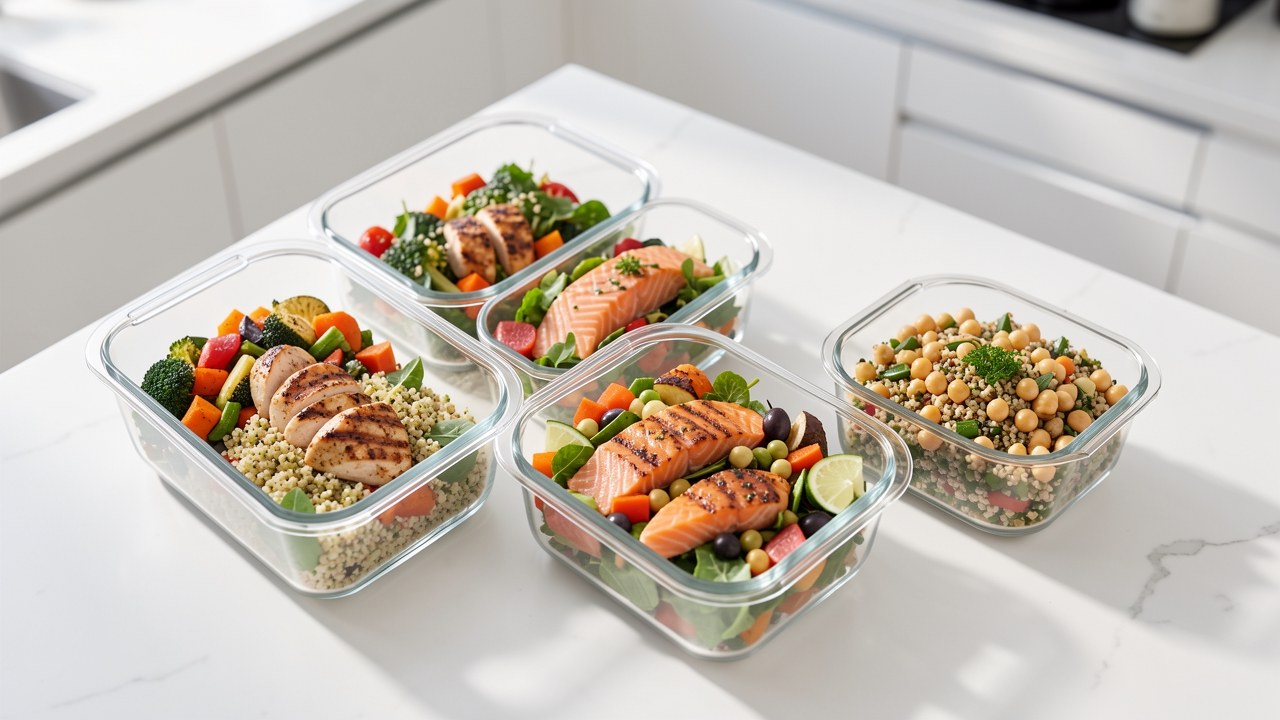
What Is Meal Prep for Athletes and Why It Matters
Meal prep for athletes is the practice of planning, cooking, and portioning meals ahead of time so you have nutritious food ready when you need it. For recreational athletes and active adults, this approach bridges the gap between knowing what to eat and actually eating well, especially on days packed with training, work, and family commitments.
The core idea is to build a routine that turns good nutrition from a daily decision into a streamlined habit. By dedicating a few hours each week to preparation, you can ensure that balanced meals and snacks are always within reach, reducing the temptation to rely on convenience foods that may not support your performance goals.
- Saves time during busy training weeks
- Reduces food waste by planning purchases
- Helps you avoid last-minute unhealthy choices
- Supports consistent energy intake and recovery
Sources: UK Sports Institute, Victorem, Fix Your Weight
How Meal Prep Supports Training, Performance, and Recovery
For athletes, the timing and composition of meals directly influence how well you train and recover. The International Society of Sports Nutrition notes that optimized timing of food intake—especially protein and carbohydrates—may improve recovery, muscle repair, and help build muscle. Meal prep makes it easier to match your eating schedule to your training demands, so you can consume the right nutrients before and after workouts.
Research suggests that spreading protein intake across the day, such as 20–40 grams every 3–4 hours, may support muscle protein synthesis. Prepping meals in advance allows you to distribute protein intake evenly across meals, which may benefit your body's ability to repair and rebuild muscle tissue.
For recreational athletes, proper nutrition is just as important as for elites. Athletes typically need higher energy intake than average individuals due to training demands, and meal prep helps ensure you meet those needs consistently without overthinking each meal.
- Pre- and post-exercise meals containing carbohydrate and protein can help improve strength and body composition.
- Distributing protein across the day supports muscle recovery.
- Planning meals around your training schedule reduces stress and improves adherence.
Sources: Journal of the International Society of Sports Nutrition, Johns Hopkins Medicine, Fix Your Weight, Frontiers in Nutrition
Key Principles: Balance, Variety, and Portion Control
A balanced athlete meal includes complex carbohydrates, lean protein, and healthy fats. The mix of these macronutrients can vary based on training intensity. According to Johns Hopkins Medicine, a sample meal composition for heavy training might be about half carbohydrates, one-quarter lean protein, and one-quarter fruits and vegetables. For moderate-intensity training, a pattern closer to one-third carbohydrates (prioritizing complex carbs), one-third lean protein, and one-third fruits and vegetables is often suggested. These are general starting points, not strict rules.
Variety ensures you get a broad range of vitamins, minerals, and phytonutrients that support overall health. Portion control helps you match energy intake to your training volume, preventing both underfueling and excess weight gain.
Meal prep encourages these principles by making it easy to portion out balanced plates in advance. Using containers with visual cues can help you build consistent portions without measuring everything each time.
- Choose whole grains, starchy vegetables, and legumes for carbohydrates.
- Incorporate lean proteins like chicken, fish, eggs, Greek yogurt, or plant-based options.
- Include healthy fats from sources like nuts, seeds, avocado, and olive oil.
- Fill the rest of your plate with colorful fruits and vegetables.
Sources: Johns Hopkins Medicine, Victorem, Fix Your Weight
storage containers
You don't need a professional kitchen to meal prep effectively, but the right tools make the process smoother and more enjoyable. A set of sharp knives, cutting boards, sheet pans, skillets, and mixing bowls are staples. A slow cooker or Instant Pot can be handy for batch-cooking proteins and stews with minimal effort.
For storage, clear containers are particularly useful because they let you see what's inside, which helps with portion control and organization. Label each container with the meal and date to keep track of freshness. Choose containers in sizes that match your typical portions—some for meals, some for snacks—and make sure they are microwave-safe if you plan to reheat. A good set of glass or BPA-free plastic containers with sealing lids works well for most athletes.
Investing in a few high-quality containers is more beneficial than buying many that don't fit your needs. Start with a stack of meal-sized containers and a set of smaller ones for sauces or nuts.
- Straight-sided containers make it easier to pack and reheat food evenly.
- Use labels and dates to avoid confusion and food waste.
- Consider containers that are freezer-safe for longer storage.
Sources: MyProMeals
Getting Started: A Step-by-Step Plan for Your First Prep Session
Starting meal prep can feel overwhelming, but breaking it into simple steps helps. The following sequence is a proven framework from sports nutrition experts.
First, create a meal bank of recipes you enjoy and that fit your nutritional needs. This is a simple collection of meal ideas you can rotate. Next, plan your weekly schedule, taking note of training days, work hours, and social commitments. Decide which meals you'll need to prepare in advance—maybe breakfasts for the week and three or four dinners.
Then, make a grocery list based on your plan and shop once. After shopping, dedicate a block of time (often two to four hours on a Sunday) to batch-cook components. Cook grains, proteins, and roasted vegetables in large batches, then mix and match into containers. Finally, store meals properly and label them with the day of the week.
- Step 1: Build a list of your go-to recipes.
- Step 2: Map your week, including workouts and other commitments.
- Step 3: Write a grocery list from your meal plan.
- Step 4: Schedule a prep session.
- Step 5: Batch-cook basics: grains, proteins, and vegetables.
- Step 6: Portion into containers and label.
- Build a meal bank of recipes you enjoy and that support your training.
- Plan your meals for the week around your schedule and training intensity.
- Create a detailed grocery list and shop for all ingredients at once.
- Set aside 2–4 hours on a convenient day for cooking and assembling.
- Cook batches of staple foods: whole grains, lean proteins, and vegetables.
- Divide food into labeled containers, storing in the refrigerator or freezer.
Sources: UK Sports Institute
Common Mistakes and How to Avoid Them
Many beginners abandon meal prep because they try to do too much at once. A few common pitfalls include preparing overly complex dishes, not planning for different training days, and storing food improperly.
To avoid these issues, start simple: repeat the same two or three breakfasts and a few go-to lunch bowls. Cook in batches and use the freezer to extend variety. Over time, you can expand your recipe rotation.
Also, remember that meal prep does not have to be an all-or-nothing project. Even prepping snacks or a few dinners can make a meaningful difference. Use clear, labeled containers to prevent accidentally eating the wrong meal or letting food spoil.
- Cooking dishes that take too long or require many steps.
- Ignoring food safety: always cool food quickly and refrigerate within two hours.
- Forgetting to account for leftovers—if you don't enjoy a meal, it's harder to stay consistent.
- Not adjusting portions for lighter or heavier training days.
Sources: UK Sports Institute, MyProMeals
Assessing Your Nutrition Needs: Macros and Timing
Understanding your macronutrient needs—carbohydrates, protein, and fat—helps you tailor meal prep to your training. While exact numbers vary individually, current sports nutrition guidelines emphasize the importance of protein distribution. Research suggests that consuming 20–40 grams of high-quality protein every 3–4 hours appears to most favorably affect muscle protein synthesis rates compared to other dietary patterns.
Nutrient timing also matters for performance. Consuming a pre-competition meal 3–4 hours before an event, focusing on half carbohydrates with lower fiber and moderate protein, is a common recommendation for those who train in the morning or compete in events. For post-exercise, combining carbohydrate and protein can support recovery. Meal prep enables you to have these meals ready at the right times.
While individual needs vary based on body size, training volume, and goals, using these principles as a starting point helps you plan meals that support your activity level.
- Include a source of protein at every meal and snack to support recovery.
- Periodize carbohydrate intake: more on heavy training days, less on rest days.
- Time meals around your workouts: a balanced meal 3–4 hours before, and a protein-carb snack after.
Sources: Journal of the International Society of Sports Nutrition, Johns Hopkins Medicine
Sample Weekly Prep Schedule for a Busy Athlete
A realistic prep schedule varies, but many athletes find it helpful to do a larger session on one day and a smaller midweek refresh. This example assumes you train in the mornings or evenings and work a typical weekday.
On Sunday, spend two to three hours cooking. You might prepare a batch of overnight oats or egg muffins for breakfasts, cook a large batch of chicken breasts or tofu, and roast a tray of vegetables. Cook a pot of quinoa or brown rice to use in lunches and dinners. Portion these into five containers for weekdays.
Later in the week, perhaps Tuesday or Wednesday evening, cook a quick skillet meal or sheet pan dinner to refresh lunches or provide a healthy dinner option. This prevents the week's food from becoming monotonous and helps you stay on track through Friday.
- Sunday: Batch cook proteins, grains, and roasted vegetables.
- Tuesday or Wednesday: Prep an additional batch of dinner or snacks.
- Friday: Use leftovers or prep a simple meal for the weekend.
Sources: UK Sports Institute, Fix Your Weight
How to Adapt Meal Prep for Different Training Days
Your energy needs change with your training load. On heavy training or high-intensity days, increase carbohydrate portions in your prepped meals. On lighter or rest days, skew meals toward protein and vegetables, with moderate carbohydrates.
Because meal prep usually involves planning several days in advance, it helps to schedule which meals you'll eat on which days. For example, if you have an intense Tuesday tempo run, plan a higher-carb dinner for Monday night and a substantial breakfast on Tuesday. Prepping allows you to move components around easily.
Also consider timing: eat a carbohydrate-focused meal about 3–4 hours before a workout, and a protein-plus-carbohydrate meal or snack within a few hours after exercise to support recovery.
- Heavy day: emphasize complex carbohydrates like brown rice, oats, or sweet potatoes.
- Moderate day: balance carbohydrates, protein, and vegetables evenly.
- Rest day: focus on protein and vegetables with smaller portion of carbs.
Sources: Johns Hopkins Medicine, Victorem
Breakfast Meal Prep Ideas
A nutritious breakfast is a cornerstone of a training diet. Prepping breakfasts can be as simple as making a batch of overnight oats in jars for the week, or baking a dozen egg muffins that you can reheat in the morning.
Overnight oats can be customized with fruit, nuts, seeds, and a scoop of protein powder. Egg muffins, made with eggs, vegetables, and cheese or dairy-free alternatives, are portable and freezer-friendly.
For variety, you might also include Greek yogurt parfaits layered with berries and granola, or whole-grain wraps filled with scrambled eggs and spinach, made ahead and refrigerated.
- Overnight oats: combine rolled oats, milk or yogurt, and your favorite toppings; refrigerate overnight.
- Egg muffins: whisk eggs, add chopped vegetables and cheese, bake in a muffin tin.
- Breakfast burritos: fill whole-grain tortillas with eggs, black beans, and salsa; freeze individually.
Sources: UK Sports Institute, Victorem, Fix Your Weight
Lunch Meal Prep Ideas
Lunch is a meal that often gets rushed. Grain bowls and wraps are excellent for prepping: they can be assembled in containers and eaten cold or reheated.
A typical grain bowl might include a base of quinoa or brown rice, a serving of roasted chicken or chickpeas, a rainbow of vegetables, and a flavorful sauce or dressing on the side. To prevent sogginess, store dressings separately.
Wraps can be made with hummus or Greek yogurt spread, lean proteins, and crunchy vegetables. They keep well for a few days and are easy to pack.
For a hot option, soups and stews are great for batch cooking and can be portioned into jars for easy lunches.
- Grain bowls with cooked grains, protein, and vegetables.
- Chicken or turkey wraps with plenty of veggies.
- Pasta or quinoa salads with beans and vegetables.
Sources: UK Sports Institute, Fix Your Weight
Dinner Meal Prep Ideas
Dinner prep often involves cooking larger portions that can be divided into multiple meals. Sheet pan meals, where you roast protein and vegetables together on one pan, are efficient and easy to scale. Stir-fries are similarly quick and allow you to use any vegetables you have.
Other ideas include slow-cooker chili or stew, baked salmon with potatoes and broccoli, or lean ground turkey with sweet potatoes. These meals freeze well, so you can prepare extra and store for busy weeknights.
When planning dinners, aim for the balanced plate proportions discussed earlier: heavier in carbohydrates on days before hard training, and lighter on rest days.
- Sheet pan chicken and vegetables.
- Turkey or tofu stir-fry with brown rice.
- Hearty lentil or beef chili in the slow cooker.
- Baked fish with root vegetables.
Sources: Fix Your Weight, MyProMeals
Snack and Portable Meal Prep Ideas
Snacks can bridge the gap between meals, especially during long training days. Portable options include hard-boiled eggs, trail mix with nuts and dried fruit, protein bites made from oats and nut butter, and cut-up vegetables with hummus.
You can also prep single-serving Greek yogurt cups or energy bars at home. Having these ready prevents impulse vending-machine buys.
Plan snacks that combine protein and carbohydrates for sustained energy. For example, an apple with nut butter, or cheese cubes with whole-grain crackers.
- Energy bites: mix oats, nut butter, honey, and add-ins like chocolate chips or seeds.
- Snack boxes with cheese, crackers, and fruit.
- Hard-boiled eggs, portioned nuts, and veggie sticks.
Sources: Victorem, Fix Your Weight
vegan meal prep ideas
Plant-based athletes can thrive with meal prep. Focus on plant proteins like legumes, tofu, tempeh, and edamame, which are also high in fiber and other beneficial nutrients.
Meal prep could include a batch of lentil bolognese for pasta, chickpea salads, or tofu scramble for breakfast. Overnight oats made with plant milk and chia seeds are hearty and protein-rich if you add nuts or protein powder.
For lunch, grain bowls with black beans and corn are colorful and satisfying. Hummus and roasted vegetable wraps are another easy option.
Remember to include a variety of protein sources throughout the day to ensure you get all essential amino acids.
- Chickpea or black bean bowls with quinoa and vegetables.
- Tofu or tempeh stir-fry with brown rice.
- Lentil soups or curries.
- Overnight oats with chia seeds and soy or almond milk.
Sources: Victorem, Fix Your Weight
Customizing Ideas to Meet Macro Needs
No single meal plan fits every athlete, so customize your prep to match your macro targets. If you need more protein, increase the portion of chicken, fish, tofu, or Greek yogurt in your prepped meals. If you need more carbohydrates, add extra servings of rice, oats, or fruit.
Use a simple approach: know your target ranges for protein, carbohydrates, and fat, and then build each container accordingly. The table below offers general guidance based on training intensity, as suggested by Johns Hopkins Medicine. These are not one-size-fits-all, but they provide a useful starting point for meal prep.
By prepping components separately, you can assemble meals that meet your macro needs without making entirely different dishes.
- Keep a digital or written food diary to understand your current intake.
- Use measuring cups and a food scale initially to learn portion sizes.
- Modify recipes by swapping ingredients to hit your targets.
| Training intensity | Carbohydrates | Protein | Fruits and vegetables |
|---|---|---|---|
| Heavy or high-intensity | About half the plate | About one-quarter of the plate | About one-quarter of the plate |
| Moderate-intensity | About one-third of the plate (choose complex carbs) | About one-third of the plate | About one-third of the plate |
Sources: Johns Hopkins Medicine
Meal Prep Ideas for a Busy Training Week
When your schedule is packed, simple is better. Focus on meals that use a handful of ingredients and minimal cooking time. For instance, grill several chicken breasts at the start of the week and pair them with microwaveable rice pouches and pre-washed greens.
Keep a few fallback options in the freezer: portions of cooked ground turkey, cooked quinoa, and roasted vegetables can be quickly thawed.
Also, consider prep-friendly shortcuts like buying pre-cut vegetables, rotisserie chicken (if it fits your nutrition goals), or canned beans. These save time without sacrificing nutritional quality.
The goal is to keep you fuelled so you can perform at your best, not to create culinary stress.
- Use batch-cooking methods like grilling or slow cooking.
- Stock your pantry with staples like oats, rice, canned beans, and frozen vegetables.
- Keep your prep session to a consistent time each week to build a habit.
Sources: UK Sports Institute, Fix Your Weight, MyProMeals
Frequently asked questions
Is meal prep necessary for recreational athletes?
Meal prep is not strictly necessary, but it can be highly beneficial for recreational athletes. It helps you maintain a balanced diet that supports your training and recovery, even when you are busy. By preparing meals in advance, you can ensure you have nutritious options readily available, which can prevent less healthy choices when you are pressed for time.
Sources: UK Sports Institute, VictoremHow many meals should I prep at once?
Most athletes find that prepping three to five days' worth of meals works well. This allows you to benefit from batch cooking while still having variety and avoiding food spoilage. If you prefer to cook more often, prepping just a few dinners can also help. Listen to your schedule and preferences.
Sources: UK Sports Institute, Fix Your WeightCan I meal prep if I have a busy schedule?
Yes, meal prep is flexible. You can start small by prepping only a few meals or components, such as cooking a batch of chicken or rice. Set aside a short time, maybe an hour, on a less busy day to prepare a couple of items. As you get used to it, you may find it easier to dedicate a longer session.
Sources: UK Sports Institute, Fix Your WeightWhat are the best containers for storing prepped meals?
Clear containers are ideal because they let you see the contents quickly. Glass containers are durable and safe for reheating, while plastic containers with tight-sealing lids are lightweight and convenient. Choose sizes that match your portions and ensure they are microwave-safe if you plan to reheat food. Labeling each container with the meal and date helps with organization.
Sources: MyProMealsHow long does prepped food last in the fridge?
Cooked meals generally last three to five days in the refrigerator if stored properly in airtight containers. For longer storage, you can freeze meals for several weeks. Always check for signs of spoilage, like an off odor or appearance, and follow food safety guidelines.
Sources: UK Sports InstituteCan I meal prep on a tight budget?
Yes, meal prep can help you save money by reducing food waste and impulse purchases. Planning meals and buying only what you need is a fundamental part of meal prep. Choose affordable staples like oats, rice, beans, eggs, and seasonal vegetables, and buy proteins in bulk when they are on sale. Cooking at home is generally less expensive than eating out.
Sources: UK Sports Institute, Fix Your WeightSources
- International society of sports nutrition position stand: nutrient timing — Journal of the International Society of Sports Nutrition
- Nutrition for Athletes: What to Eat Before a Competition — Johns Hopkins Medicine
- An Athlete's Guide to Basic Food Prep and Cooking — UK Sports Institute
- Meal Prep for Athletes: A Tool for Nutrient Timing & Performance — Victorem
- Meal Prep for Athletes Guide to Boost Energy and Recovery — Fix Your Weight
- Meal Prep for CrossFit, Runners & Bodybuilders: Eat to Perform — MyProMeals
- Athletes’ nutritional demands: a narrative review of nutritional requirements — Frontiers in Nutrition