Why Meal Prep Methods Matter for Athletes
For active adults and recreational athletes, eating well is not just about choosing the right foods—it's about having those foods ready when training, work, and life compete for your time. Meal prep is the process of preparing meals or ingredients in advance to make healthy eating easier and more efficient.
Different methods suit different schedules, kitchen setups, and goals. Some athletes want grab-and-go meals; others prefer flexibility to mix and match foods each day. Understanding the common methods—full meal prep, batch cooking, and component prep—can help you build a routine that sticks.
- Meal prep can save time during the week, reduce stress, and help ensure nutritious foods are always available.
- The right method depends on your training schedule, cooking preferences, and how much variety you like.
Sources: BeFueled Sports Nutrition, Berry Street, WOLFpak, Bucket List Tummy, UK Sports Institute, Victorem
Full Meal Prep: Cooking Complete Meals in One Session
Full meal prep means cooking complete meals in a single session and storing them for the week. For example, you might prepare five containers of chicken, rice, and roasted vegetables on Sunday, so each day you simply grab a ready meal.
This method is best for athletes who prioritize speed and simplicity during busy weeks. Because the meals are already assembled, there is no need to think about what to cook or how to combine ingredients later.
- Reduces daily decision-making and time in the kitchen.
- Works well if you are comfortable eating similar meals for several days.
Sources: Berry Street, WOLFpak
Component Prep: Preparing Ingredients Separately
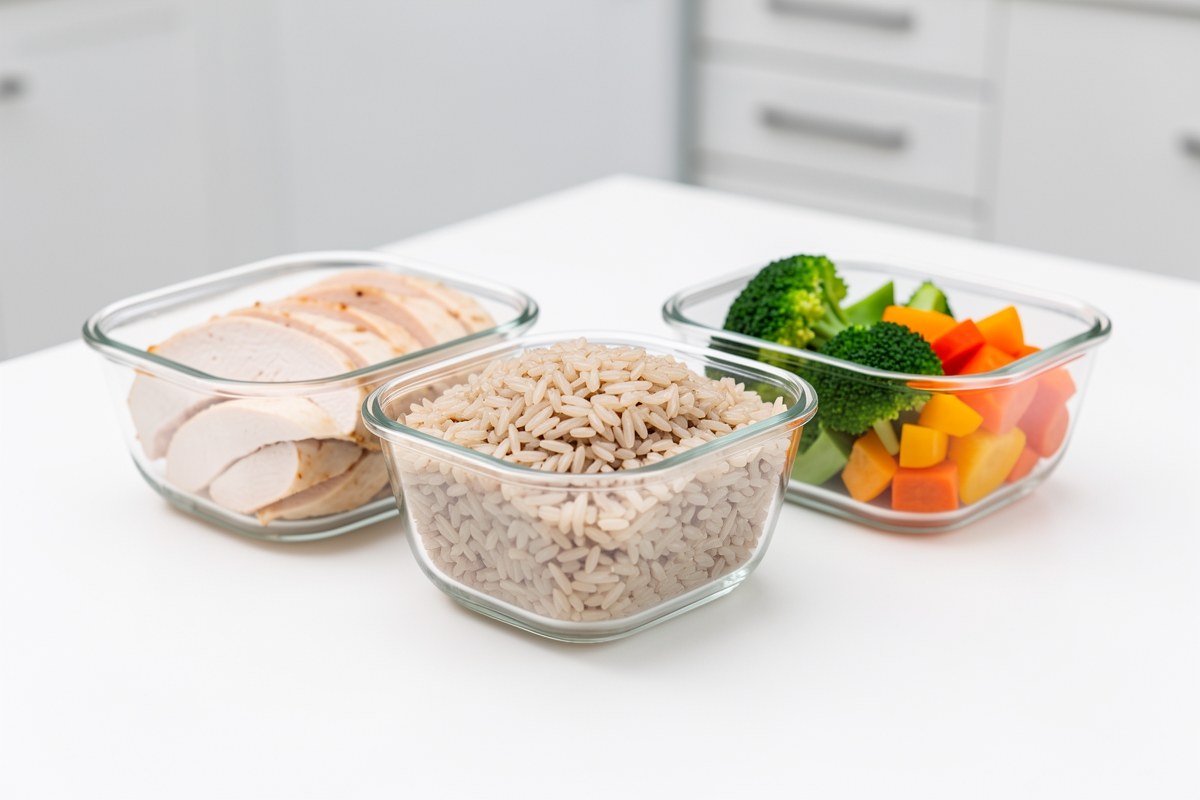
Component prep involves preparing separate ingredients—chopped vegetables, cooked proteins, cooked grains—for later assembly. Instead of making full dishes, you prep the building blocks and combine them into different meals throughout the week.
This gives you more variety and flexibility. You can mix grilled chicken with a quinoa salad one day, then use the same chicken in a wrap the next. It is ideal for athletes with busy schedules who want quick assembly without eating the exact same meal daily.
- Simple prep tasks can include pre-washing and chopping vegetables, portioning snacks, and cooking grains in bulk.
- Lets you adapt meals to hunger, training demands, or cravings.
Sources: BeFueled Sports Nutrition, Bucket List Tummy
Batch Cooking: Proteins, Grains, and Vegetables
Batch cooking is a flexible method that involves cooking large quantities of food—like proteins, grains, and vegetables—in one session and storing them for later. It can take several forms: making freezer meals, cooking for the week, or planning leftovers.
Many athletes cook a large batch of chicken breasts, a pot of brown rice, and a sheet pan of roasted vegetables, then combine these components into different meals. Cooking in bulk is efficient and gives you the freedom to create a variety of plates without spending hours in the kitchen every night.
- Freezer-friendly dishes such as lasagna, chili, and stews work well for batch cooking and freezing.
- Batch cooking and component prep often overlap; you might batch-cook proteins and prep vegetables separately.
Sources: BeFueled Sports Nutrition, Bucket List Tummy, UK Sports Institute
Hybrid Approaches
You do not have to pick only one method. Many athletes combine approaches, for example, batch cooking proteins while also prepping individual components like grains and vegetables. A hybrid strategy can give you the best of both worlds: the convenience of ready protein and the flexibility to build different meals.
Meal prep is not limited to cooking identical full meals; it can involve preparing components to mix and match throughout the week. The goal is to make your routine work for your training schedule and lifestyle.
- If you like variety, component prep or a hybrid method may beat full prep.
- Start with what feels manageable, then adjust as you learn what works for your week.
Sources: BeFueled Sports Nutrition, Bucket List Tummy
Choosing the Right Method for Your Training Schedule
Your training cycle, work hours, family commitments, and cooking confidence all influence which method fits you best. The key is to plan around your schedule, not to force a one-size-fits-all approach.
If you train early and have little energy to cook in the evening, full meal prep can remove the evening burden. If you have a variable schedule and prefer variety, component prep or batch cooking may give you the flexibility you need.
- Full meal prep: Best for athletes who want grab-and-go meals and minimal daily cooking.
- Batch cooking: Best for athletes who want flexibility to combine components into different meals.
- Component prep: Best for athletes with busy schedules who want variety and quick assembly.
Sources: BeFueled Sports Nutrition, Berry Street, WOLFpak, Bucket List Tummy, UK Sports Institute
Time and Effort: Comparing the Methods
Each meal prep method asks for a different mix of upfront time, daily effort, and storage space.
Sources suggest that a typical meal prep session—whether you are cooking complete meals or prepping components—can take about 1 to 3 hours per week. The way that time is spent, however, differs by method: full meal prep concentrates the work into one longer session, while component prep can be broken into shorter tasks spread across the week.
- Full meal prep can cut daily cooking to almost zero because the meals are already complete.
- Batch cooking and component prep give you more flexibility, but you will still spend a little time each day putting meals together.
- All methods require enough refrigerator or freezer space to store what you have prepared.
| Option | Category | Definition | Best for |
|---|---|---|---|
| Full Meal Prep | Meal Prep Method | Cooking complete meals in a single session and storing them for the week. | Athletes who prefer grab-and-go meals and minimal daily cooking. |
| Batch Cooking | Meal Prep Method | Cooking large quantities of food (e.g., proteins, grains, vegetables) in one session and storing for later. | Athletes who want flexibility to combine components into different meals. |
| Component Prep | Meal Prep Method | Preparing separate ingredients (e.g., chopped vegetables, cooked proteins, grains) for later assembly. | Athletes with busy schedules who want variety and quick assembly. |
Sources: Berry Street, WOLFpak, BeFueled Sports Nutrition, UK Sports Institute, Bucket List Tummy
Frequently asked questions
What is the most time-efficient meal prep method?
The most time-efficient approach depends on how you define 'time-efficient.' Full meal prep minimizes daily cooking because meals are ready to eat, so it may save the most minutes on busy weekdays. In contrast, component prep and batch cooking let you spread prep time across the week and still limit daily effort. Choose the method that fits your schedule and feels sustainable.
Sources: Berry Street, UK Sports InstituteCan I combine different meal prep methods?
Yes. Many athletes combine methods, such as batch cooking proteins while also prepping components like grains and vegetables. A hybrid approach can give you both convenience and flexibility.
Sources: BeFueled Sports Nutrition, Bucket List TummyWhat is the difference between meal prep and batch cooking?
Meal prep is the broader process of preparing meals or ingredients in advance. Batch cooking is one specific method that involves cooking large quantities of food—like proteins, grains, or complete dishes—in one session and storing them for later. In other words, batch cooking is a type of meal prep.
Sources: BeFueled Sports Nutrition, Berry Street, UK Sports InstituteWhich method is best for someone with a busy schedule?
There is no single best method for everyone. If you want minimal daily cooking, full meal prep gives you grab-and-go meals. If you prefer variety and quick assembly, component prep is designed for busy schedules. A hybrid approach can also work. Choose based on your priorities.
Sources: BeFueled Sports Nutrition, Berry Street, WOLFpak, Bucket List TummySources
- Easy + Healthy Meal Prep for Athletes — BeFueled Sports Nutrition
- Meal Prep For Athletes: Tips, Ideas, And Mistakes To Avoid — Berry Street
- The 4 Types of Meal-Prepping Methods for Athletes — WOLFpak
- How To Simplify Meal Prep for Athletes — Bucket List Tummy
- An Athlete's Guide to Basic Food Prep and Cooking — UK Sports Institute
- Meal Prep for Athletes: A Tool for Nutrient Timing & Performance — Victorem